What Is the Weather Like in Las Vegas? 5 Essential Facts

What is the weather like in Las Vegas? In short: extreme, dry, and sunny almost every single day of the year. The city sits in the middle of the Mojave Desert, so the temperature swings hard between a scorching afternoon and a chilly night, sometimes in the same 24 hours. If you’re planning a trip, here’s what actually matters before you pack your bag.
Las Vegas Average Weather by Month
| Month | Avg High (°F) | Avg Low (°F) | Rain (Inches) |
| January | 58°F | 39°F | 0.48″ |
| February | 63°F | 43°F | 0.48″ |
| March | 71°F | 49°F | 0.42″ |
| April | 78°F | 55°F | 0.21″ |
| May | 89°F | 66°F | 0.28″ |
| June | 100°F | 74°F | 0.12″ |
| July | 105°F | 81°F | 0.35″ |
| August | 103°F | 79°F | 0.49″ |
| September | 95°F | 71°F | 0.28″ |
| October | 82°F | 59°F | 0.21″ |
| November | 67°F | 46°F | 0.43″ |
| December | 57°F | 39°F | 0.38″ |
Wondering what is the weather like in Las Vegas before you pack? Here’s what actually matters.
5 Things to Know Before You Pack
1. The Heat Is Real, But It’s Dry
Summer highs regularly clear 100°F, and July can push past 110°F. The upside: low humidity means your sweat evaporates instead of sitting on your skin, so the heat feels more manageable than a humid 90°F day back east. Still, dehydration sneaks up fast. Locals call the scratchy throat that shows up after a day outside “Vegas Throat,” and it hits tourists hardest.
2. Spring and Fall Are the Sweet Spot
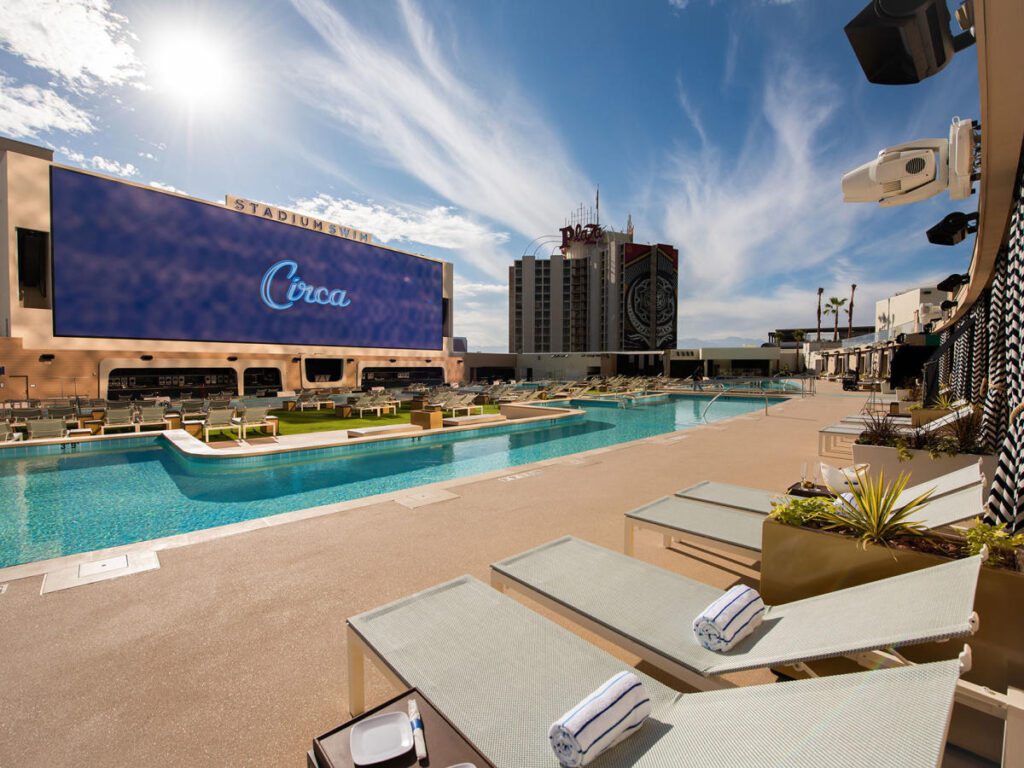
Mid March through mid May, and again mid-September through mid November, deliver the most walkable weather of the year. Daytime highs sit in the 70s and 80s, nights cool off comfortably, and the pools are open without the brutal midday sun. This is prime time for the Strip, patio dining, and day trips out of town.
Circa sits right on Fremont Street and puts Stadium Swim, the adults-only rooftop pool, steps from your room instead of a rideshare away. Spring and fall crowds are thinner than on a July Saturday, so it’s a smart window to book a stay and actually get a lounge chair without fighting for it. Downtown’s walkable strip of bars and restaurants is right outside the door, too, so you’re not stuck relying on the Strip for a night out.
3. Summer Nights Don’t Cool Down Much
Pavement and buildings soak up heat all day and release it slowly after dark. That means a July night can still hover near 90°F at midnight. Plan indoor activities or pool time in the evening rather than counting on a cool breeze to save you.
4. Winter Gets Colder Than People Expect
Snow on the Strip is rare and treated like a citywide event when it happens. But desert air holds almost no heat once the sun sets, so a mild 60°F afternoon can drop into the 30s after dark. Pack layers, not just a light jacket.
5. Wind and Dust Show Up, Especially in Spring
Gusty spring winds can kick up dust storms and trigger red flag fire warnings. Summer brings its own version: sudden monsoon thunderstorms in July and August that cause flash flooding with little warning. Check the forecast the morning of any outdoor plans.
Where to Go by Season
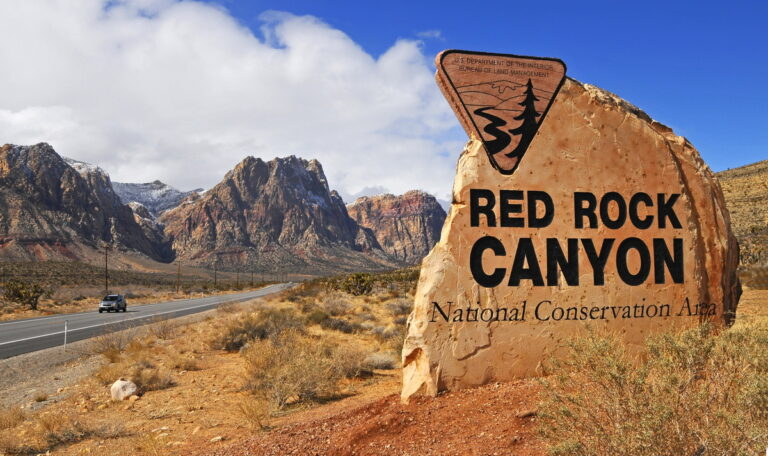
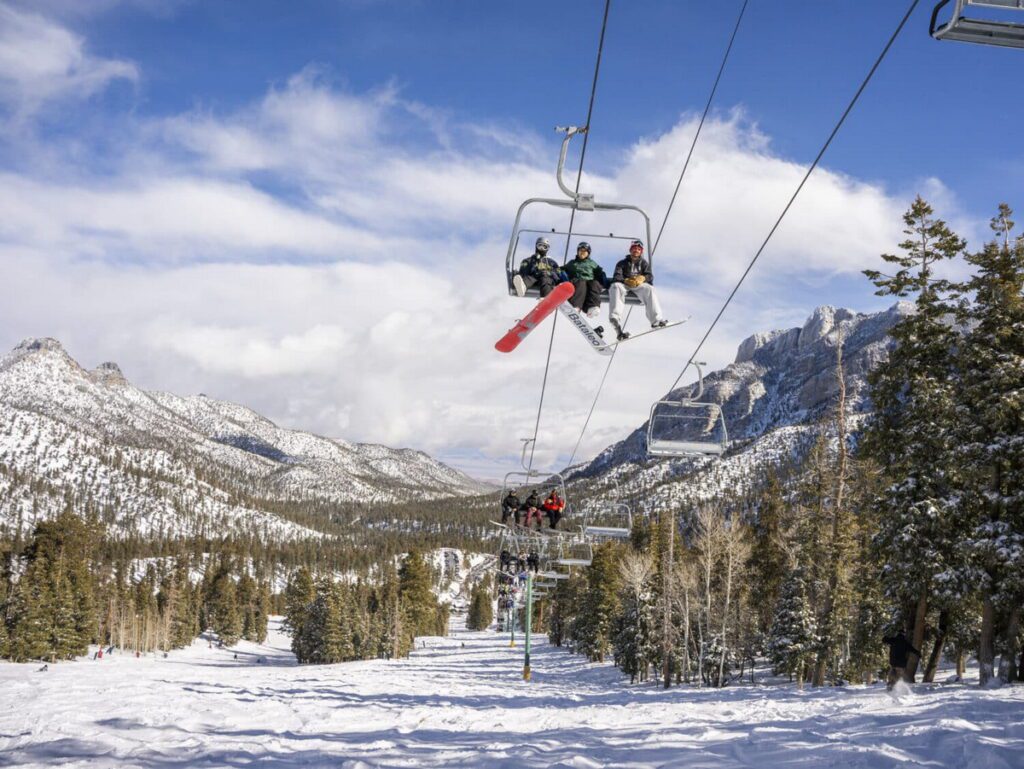
Summer heat is easiest to handle at a Strip pool day or by escaping the valley floor entirely. Mount Charleston sits roughly 20 to 30 degrees cooler than downtown Las Vegas, making it a solid summer bailout. Winter flips the script: cooler valley temps make hiking at Red Rock Canyon far more comfortable, while Lee Canyon opens up for skiing and snowboarding less than an hour from the Strip.
Red Rock Canyon has trails for every skill level, from the easy 1-mile Calico Tanks warm-up to the more demanding La Madre Spring loop, so winter visitors can pick their pace. Mount Charleston runs about 45 minutes from the Strip and stays open for day trips year-round, with Lee Canyon’s ski runs kicking in once the snow sets in. Bring layers either way. The temperature swing between the valley floor and the mountain can hit 20 to 30 degrees.
What to Pack
- Summer: high SPF sunscreen, a reusable water bottle, light breathable fabrics
- Winter: a mid-weight jacket, lip balm for the dry air, closed-toe walking shoes
- Year round: sunglasses, since the desert sun rarely takes a day off
The Bottom Line
So, what is the weather like in Las Vegas? It depends entirely on when you land. Come in July for pool season, and know the nights won’t cool off much. Come in March or October for the most comfortable walking weather the city offers. Whatever month you choose, expect sunshine, dry air, and a climate that shifts fast once the sun goes down.